

'If after 3-9 weeks we don't have fresh content, then there is a problem.'

Zee News, Zee Media's flagship brand, was at the centre of a controversy over its media practices that pushed Subhash Chandra towards BJP.

Whether it is non-Hindi films dubbed in Hindi or Hindi dubbed in other Indian languages or English dubbed in Indian languages, the whole multilingual film is bringing more ticket sales.
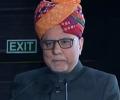
The chairman of the Essel Group says he has settled 91.2 per cent of the estimated Rs 11,000 crore debt on the group's books.

Netflix is reminiscent of Star TV in the 1990s: Very Western in its gaze, very expensive, and clueless, notes Vanita Kohli-Khandekar.

Puneet Goenka's ability to stay calm is probably what helped Zee rise from a down-in-the-dumps broadcaster into one of the largest, steadiest and most profitable media companies in India, reports Vanita Kohli-Khandekar.

'Why was PKL scheduled bang in the middle of festivals and big film releases?' asks Vanita Kohli-Khandekar.

'Where are the funny writers on Indian television and OTT platforms?' 'Where are the sitcoms?' asks Vanita Kohli Khandekar.

The problem is not that more people are not watching more TV, but that they are not finding anything of interest on Hindi television, says Vanita Kohli-Khandekar.

The Rs 19,100 crore 'Indian film industry' is more than its monikers for three simple reasons, feels Vanita Kohli-Khandekar.

There is talk about 'cultural connect' and the 'warmth of storytelling' in Indian films vis-a-vis the spectacle and scale that Hollywood specialises in.

Dangal's and Shemaroo's entry shows there is ad-supported gold at the bottom of the Indian consumer pyramid if you can keep the costs low.

'We have to believe that in the long run, stable and secure societies thrive on a reputable news culture and people will recognise this.'

It is the most potent symbol of India's soft power -- more perhaps than the IT industry and our managerial skill, notes Vanita Kohli-Khandekar
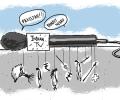
'Of the 202 debates, 79 were around attacking Pakistan and 66 attacking the Opposition and Nehru.' 'The PMC Bank scam where thousands of depositors lost their savings got just one,' points out Vanita Kohli-Khandekar.

'Demonetisation is just a trigger; the Indian print industry had this coming for years.'

'We commission more from here than anywhere else.'

Both Raazi and Veere Di Wedding are interesting films that worked. There is no point reading a trend in them, says Vanita Kohli-Khandekar.

Even if it wants to censor what you read, watch, or consume, the amount of content online is so huge that it is physically impossible for any government to do it, notes Vanita Kohli-Khandekar.
The ability to make out fake news from real could save the coming generations a huge amount of conflict and heartburn, says Vanita Kohli-Khandekar.

Cinema screens bring in over 60% of the Rs 19,100 crore that Indian films earned in 2019. The reception a film gets in theatres impacts the price of every other revenue stream -- TV, OTT, overseas. Vanita Kohli-Khandekar explains why the theatre business is not doomed and why OTT won't become the first window of release.

India's news broadcasters are a national shame that have polarised Indians, observes Vanita Kohli-Khandekar.

'This is not like a one quarter hit; it will take time.'

Sony's estimated profit on IPL over 10 years is 2,500 crore. Why didn't it fight tooth & nail to keep the rights?

Over the last decade the Indian film industry has reinvented itself. Do film critics need to do that too?
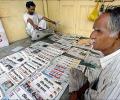
The print media's declining share of the media industry is not as worrying as its attitude to the factors critical to growth.

Why do Hindi cinema superstars flounder in their fifties, asks Vanita Kohli-Khandekar.

And since social media platforms benefit from it, shouldn't they too be held responsible for the hate and fake news they spread, asks Vanita Kohli-Khandekar.
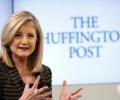
Huffington Post has grand plans for India.

It could reach more than 530 million viewers on TV and a few hundred million more online. But can it make money for Disney Star?

Vanita Kohli-Khandekar analyses why the rising tide of conservatism will not help India's ambition to have a world-class media industry.

Love Sherlock, Dr Who, and Downton Abbey? Vanita Kohli-Khandekar finds out how the UK became one the world's largest creators of television content.

The hit parade of well-made movies continues, ticket sales are creeping up and OTTs are upping the game in one of the best years for the film industry.

'Are we seeing the beginning of the communalising of one of the most iconic film industries in the world?' asks Vanita Kohli-Khandekar.
Zee and Star, the two largest media companies in India, are undergoing some radical ownership changes. What could it mean? Vanita Kohli Khandekar attempts an answer.

Poor policymaking, a fractious industry and the cockeyed nature of regulations are to blame, saya Vanita Kohli-Khandekar.

Priyanka Chopra, Irrfan Khan and Nawazuddin Siddiqui make a global statement on the power of Indian cinema, says Vanita Kohli-Khandekar.

Monetising online readership, a deeper focus on content and getting revenue from the reader are ways to make the business future-proof, observes Vanita Kohli-Khandekar.

From convincing film-makers to do shows for online, to having a slate with some of the best films and shows, Amazon Prime Video has come a long way since it came to India four years ago.
 © 2026 Rediff.com - Advertise with us - Disclaimer - Privacy Policy - Sitemap - Feedback - About us - Terms of use - Grievances